
Are you struggling to attract new clients as a financial advisor? One fact is clear: digital marketing strategies are key. This blog will guide you on ad campaigns that can bring in more prospective clients.
Key Takeaways
-
Financial advisors need a clear marketing plan that includes digital ads, content marketing, and social media to attract clients.
-
Effective ad campaigns focus on understanding the target audience and offering them clear value propositions.
-
SEO and PPC advertising are important for making services more visible online.
-
Content like blog posts, videos, and webinars helps engage potential clients.
-
Using CRM software and analytics tools can help measure success and manage client relationships effectively.
Ad Campaign Essentials for Financial Advisors
Financial advisors need a clear marketing plan to reach potential clients. This plan should include digital advertising, content marketing, and social media strategies. A successful marketing strategy for financial advisors focuses on the target market and creates ads that speak directly to their needs and goals.
A defined marketing strategy helps financial advisors connect with ideal clients, making every marketing dollar count.
Using tools like search engine optimization (SEO) can boost a website's ranking on search engines. This makes it easier for potential clients to find financial advising services online.
Paid advertisements or PPC ads also play a big role in getting more eyes on your services quickly.
Components of Effective Ad Campaigns
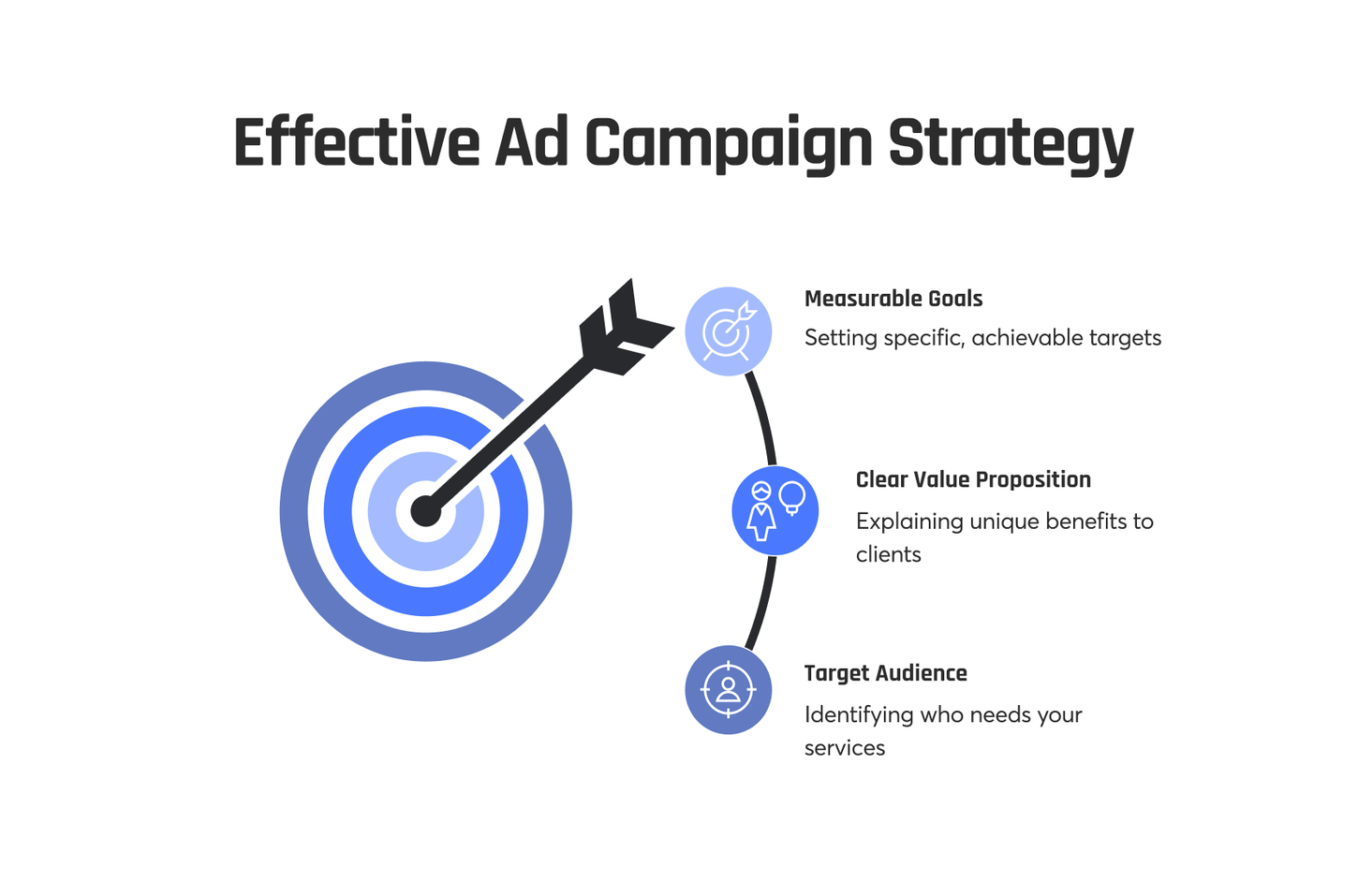
Effective ad campaigns come down to targeting the right audience, clearly stating your value proposition, and setting measurable goals. Each piece matters to a successful ad campaign strategy for financial advisors.
Identifying Target Audiences
Identifying target audiences comes first for financial advisors tailoring their marketing efforts. Most financial advisors need to understand who needs their services, such as small business owners, individuals planning for retirement, or those seeking personalized financial assessments.
Knowing the specific group helps in creating ads that speak directly to potential clients' needs and goals. It ensures that the marketing spend reaches the right people on platforms like social media channels and through email marketing.
Once you know your audience, developing a clear value proposition becomes the next step. This involves explaining how your advisory services stand out from others in the financial industry.
Developing a Clear Value Proposition
A clear value proposition tells potential clients why they should pick you for financial advisory services. It explains how your service stands out from others. For a financial advisor, this might mean focusing on personalized retirement planning or sharing client success stories.
Your value proposition makes it easy for people to see the benefits of choosing you.
Your message must be simple and direct. Say what makes you different in a way that matters to your audience. This step sets the stage for setting goals that are both clear and measurable.
Know what makes you different, and let your clients see it.
Establishing Measurable Goals
Financial advisor ad campaigns need measurable goals. These goals must be specific, achievable, and tied to key performance indicators (KPIs). For example, if the goal is to increase website visitors through digital ads, a specific target number should be set within a defined timeframe.
Linking these goals to KPIs such as click-through rates and conversion rates lets financial advisors measure the success of their ad campaigns. That gives clear benchmarks for evaluating marketing efforts and room to adjust for better campaign performance.
Digital Marketing Tactics for Financial Advisors
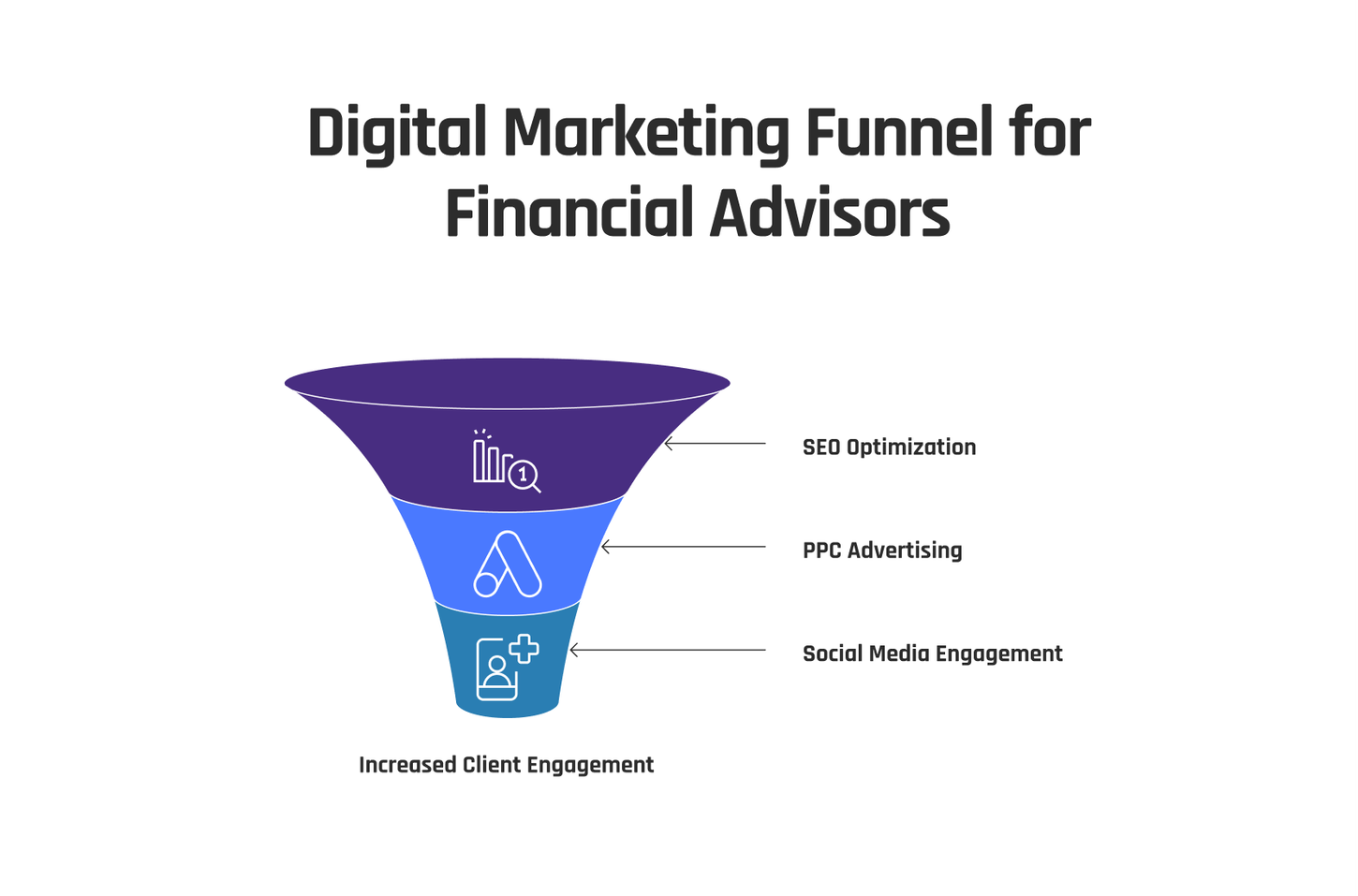
Digital marketing tactics for financial advisors include boosting visibility through SEO, implementing PPC advertising, and engaging audiences via social media.
Enhancing Visibility Through SEO
To improve visibility through SEO as a financial advisor, optimize your website and content with relevant keywords like "financial planning" and "financial advisor advertising".
That improves search engine ranking and brand awareness. For example, blog articles around topics such as "client acquisition" or "marketing objectives" can attract more traffic to your site.
Working SEO into your online ads and social media posts can also increase organic reach. Consistently producing valuable content customized to your audience strengthens your online presence.
SEO drives lead generation too. Local keywords such as "independent financial advisors" or "advisor marketing" target potential clients within specific geographic areas.
That targeted approach raises the chances of reaching individuals who are looking for solutions matched to their particular financial needs.
Implementing PPC Advertising
When implementing PPC advertising for financial advisors, focus on relevant keywords such as "financial advisor ads" and "paid advertising" to reach potential clients.
Platforms like Google Ads maximize visibility and put ads in front of individuals actively seeking financial advice. By setting a specific budget and monitoring key performance indicators (KPIs) such as click-through rates and conversion rates, financial advisors can improve their PPC campaign results.
Social media is the other half of the digital picture.
Engaging Audiences via Social Media
Engaging audiences through social media means using the platforms where potential clients already spend time. Sharing pertinent content and interacting with followers builds brand awareness and confidence.
For example, sharing insights about investment strategies or creating video promotions about your advisory business's achievements can draw in more clients. Online events like webinars on social media give existing and potential clients useful information while demonstrating your expertise in financial advising.
Strategic use of social media can also lead to cost-effective marketing that produces results.
Implementing Content Marketing Strategies
Content marketing strategies for financial advisors involve creating engaging blog articles, white papers, and employing video marketing techniques to appeal to the target audience.
Hosting webinars and online events can also enhance client engagement and trust in your expertise.
Creating Blog Articles and White Papers
Blog articles and white papers work when the content resonates with the target audience. Cover topics such as retirement planning, investment guidance, or market trends.
Use keywords deliberately within the content to help SEO and visibility on search engines. Draw on data from industry reports and statistical analysis to support claims and add real insight.
A blend of educational resources and actionable advice positions financial advisors as leaders in their field while engaging potential clients seeking relevant information.
White papers add credibility by offering in-depth analysis or research findings on complex financial topics such as tax implications of investments or long-term wealth management strategies.
These pieces should be thorough yet accessible, a real resource for readers seeking solutions to their financial concerns. Prioritize quality over quantity, and these blog articles and white papers become working tools for building brand awareness and nurturing client relationships.
Employing Video Marketing Techniques
Video marketing helps financial advisors connect with their audience. It lets you convey your message visually. Informative, relevant video content attracts potential clients, raises engagement on social media platforms, and boosts visibility.
Video ads are also budget-friendly, a practical option for financial advisors expanding their reach affordably. Video within your overall digital marketing strategy demonstrates your expertise and builds credibility with existing clients while capturing the attention of new ones.
Hosting Webinars and Online Events
Financial advisors can also utilize webinars and online events to connect with clients and prospects. This can offer a convenient way to provide valuable financial advice and engage with the audience in real-time. Here's how hosting webinars and online events can benefit financial advisors:
-
Interaction: Webinars allow direct interaction between the advisor and the audience, which builds engagement and trust.
-
Expertise: Advisors can demonstrate their expertise by presenting relevant and valuable content during these events.
-
Lead Generation: Webinars serve as effective tools for generating new leads and expanding the client base.
-
Educational Opportunities: Online events provide an opportunity for educating clients on complex financial topics, demonstrating thought leadership, and building credibility.
-
Networking: Hosting online events enables advisors to connect with other professionals, potentially leading to referrals or partnerships.
-
Cost-Effective Marketing: Compared to traditional seminars, hosting webinars is more cost-effective while reaching a wider audience.
-
Data Collection: Webinar platforms often provide analytics that can be used to understand attendee interests and behavior, enabling advisors to tailor future marketing strategies.
-
Customer Retention: Regularly hosting webinars allows advisors to maintain and strengthen relationships with existing clients by providing ongoing value through educational content.
Strategies for Email Marketing Success
Email marketing success depends on developing a quality email list and tailoring email outreach to your audience. With a personalized approach, financial advisors can build client relationships and grow the business.
Cultivating a Quality Email List
To develop a quality email list, financial advisors should concentrate on constructing a database of engaged and interested recipients. Offering valuable content such as educational resources or webinars aligned with the interests and needs of the target audience is an effective approach.
Utilizing various marketing channels like social media, events, or blog articles, financial advisors can attract individuals interested in their services and nurture them into loyal subscribers.
Maintain the email list regularly by removing inactive or disengaged contacts to keep deliverability rates and engagement high. Segmentation based on clients' preferences and behaviors makes communication more personal for specific groups within the larger email list.
Customizing Email Outreach
To engage potential clients effectively, financial advisors should customize their email outreach. Here's how:
-
Personalize Content: Tailor emails to address specific client needs and concerns, increasing relevance and engagement.
-
Segmented Campaigns: Divide the email list into segments for targeted messaging based on client demographics or investment goals.
-
A/B Testing: Experiment with different subject lines, content, and calls-to-action to determine the most effective approach.
-
Automated Follow-Ups: Implement automated responses to nurture leads and maintain regular communication with potential clients.
-
Compliance Adherence: Ensure all email communications adhere to industry regulations regarding client correspondence.
By customizing email outreach in these ways, financial advisors can enhance client relationships and improve conversion rates.
Classic Marketing Techniques
Classic marketing techniques for financial advisors include direct mail campaigns and organizing networking events and seminars. These strategies can help in reaching potential clients and building professional relationships within the industry.
Executing Direct Mail Campaigns
Direct mail campaigns remain a valuable marketing strategy for financial advisors. The targeted nature of direct mail allows advisors to reach specific demographics effectively, creating personalized connections with potential clients.
With good design and engaging content, financial advisors can deliver their message directly to the recipient's mailbox, stand out from digital clutter, and leave a lasting impression.
This method also provides tangible results through response rates and conversions, offering measurable returns on investment that can be tracked using analytics tools.
Financial advisor firms should consider direct mail as one channel in a broader plan. Combined with digital tactics such as social media marketing and PPC advertising, direct mail campaigns raise brand visibility and engagement with different audiences, and expand the firm's client base without breaking the budget.
Organizing Networking Events and Seminars
Financial advisors can enhance their marketing efforts by organizing networking events and seminars as part of their advertising strategies. This builds connections, credibility, and confidence with potential clients. Networking events and seminars give financial advisors a stage for their expertise and a way to connect with a broader audience.
-
Utilize professional platforms: Use online tools such as Eventbrite or LinkedIn to arrange and promote the event, reaching out to a broader audience.
-
Engage guest speakers: Invite industry experts or successful clients to speak at the event, adding value and drawing interest from attendees.
-
Provide valuable content: Offer insightful presentations on financial topics that are relevant to your target audience's concerns or aspirations.
-
Facilitate real interactions: Create opportunities for attendees to engage with each other and your team, building relationships that may lead to future business.
-
Follow up effectively: After the event, continue engagement through personalized emails or phone calls to nurture potential leads gathered during the seminar or networking event.
Face-to-face interaction builds confidence and establishes expertise in a way digital channels can't, and it strengthens client-advisor relationships at the same time.
Effective Tools for Campaign Management
Manage campaigns efficiently with CRM software plus analytics and tracking tools. Together they keep things organized and support informed marketing decisions.
Integrating CRM Software
CRM (Customer Relationship Management) software helps financial advisors manage client relationships efficiently. It lets advisors store and organize client information, track interactions, and identify opportunities for personalized communication.
Streamlining these processes increases productivity and improves service to clients.
CRM software also allows financial advisors to analyze customer data, monitor sales performance, and measure the success of marketing campaigns. With features like lead scoring and automated workflows, this technology helps in identifying potential clients and nurturing them through targeted marketing efforts.
CRM software also reveals client behaviors and preferences, so advisors can tailor their services to individual needs. Built into a marketing strategy, it gives financial advisors what they need to maintain strong client relationships while running the business efficiently.
Utilizing Analytics and Tracking Tools
To measure the success of ad campaigns, financial advisors should utilize analytics and tracking tools. These tools assist in tracking key performance indicators (KPIs) such as website traffic, conversion rates, and audience engagement.
With CRM software, advisors can manage client data and interactions and improve marketing strategies. Analytics tools reveal audience behavior, so advisors can refine their marketing efforts for better results.
Financial advisors should also use tracking tools to monitor ad placements and measure the effectiveness of different marketing channels. This allows them to make data-driven decisions in allocating their marketing budget effectively for cost-effective strategies that deliver meaningful results.
Overcoming Marketing Challenges for Financial Advisors
Industry regulations present a significant challenge for financial advisors. Budget management for marketing takes careful planning too.
Navigating Industry Regulations
Financial advisors face many industry regulations in their marketing strategies. These regulations are essential to comply with federal and state laws that apply to financial promotions, advertising, and client communications.
Marketing materials need to be accurate and not misleading. Financial advisors must ensure they meet the standards set by regulatory bodies such as the Securities and Exchange Commission (SEC) or the Financial Industry Regulatory Authority (FINRA).
Key strategies for addressing industry regulations include staying informed about updates in regulatory guidelines, maintaining clear records of all marketing activities, obtaining pre-approval from compliance departments for advertisements where necessary, and ensuring that all digital communications adhere to data privacy laws such as the General Data Protection Regulation (GDPR).
Financial advisors need to stay current with these rules, which change often, while devising effective ad campaigns.
Following best practices in a complex regulatory environment builds client confidence, and it belongs in any cost-effective marketing strategy.
Budget Management for Marketing
Marketing budgets deserve close attention. Allocating funds well maximizes ROI, so identify cost-effective strategies and tools. A well-structured plan helps you hit marketing goals without overspending.
Financial advisors may diversify across tactics like PPC marketing, content creation, and email marketing to reach a wider audience within their budget constraints. Analytics and tracking tools let you monitor expenses and performance closely, so resource allocation decisions rest on real numbers.
Managing the budget based on detailed analysis of each tactic's performance keeps marketing efforts sharp while staying within allocated funds.
Evaluating the Success of Ad Campaigns
To measure the effectiveness of ad campaigns, track key performance indicators (KPIs). Optimizing conversion rates also shows the impact and success of the campaigns.
Tracking Key Performance Indicators (KPIs)
Financial advisors need to monitor key performance indicators (KPIs) to assess the success of their ad campaigns. Here are the ones to watch:
-
Conversion Rate: Evaluate the percentage of website visitors who complete a desired action, such as filling out a contact form or making an inquiry.
-
Cost Per Lead: Calculate the expense incurred for each generated lead through the ad campaign to ensure cost-effectiveness.
-
Return on Investment (ROI): Measure the profitability of the ad campaign by assessing the revenue gained against the overall investment.
-
Click-Through Rate (CTR): Analyze the effectiveness of ad copy and visuals by assessing the proportion of users who click on an ad after viewing it.
-
Lead Quality: Assess the quality of leads obtained through the campaign to ensure they align with the target clientele.
These KPIs tell financial advisors what to refine in their marketing strategies.
Optimizing Conversion Rates
To optimize conversion rates, here are key strategies:
-
Use A/B testing to compare different ad elements and determine the most effective ones.
-
Improve website user experience to make it easier for visitors to convert.
-
Implement clear and compelling call-to-action buttons on landing pages.
-
Analyze data to identify potential bottlenecks in the conversion process.
-
Personalize content and offers based on customer behavior and preferences.
-
Streamline the checkout process for financial products or services.
-
Use customer testimonials and case studies to build trust and confidence.
Conclusion
A well-thought-out ad campaign pays for itself in a competitive financial advisor market. By pinpointing target audiences and crafting compelling value propositions, advisors can develop effective campaigns to reach potential clients.
Digital marketing tools like SEO, PPC ads, and social media are cost-effective ways to raise visibility and engagement.
Content marketing through blogs, videos, and webinars further strengthens the advisor's online presence. Email outreach provides a direct line to clients with personalized content.
Classic techniques such as direct mail campaigns and networking events also build connections.
CRM software and tracking tools evaluate campaign performance. Challenges like industry regulations require careful handling.
Examining key performance indicators helps fine-tune strategies over time.
Put these ad campaign strategies to work and your market positioning improves, along with your ability to attract clients seeking tailored financial solutions.
FAQs
1. What is a financial advisor marketing plan?
A financial advisor marketing plan is a strategy that many financial advisors use to promote their services, attract new clients and maintain satisfied ones.
2. How can I differentiate my ad campaign from other financial advisors?
You can stand out by using various marketing strategies such as creating relevant content that resonates with your target audience or offering unique services that meet their needs better than the competition.
3. Is it cost effective to have a detailed marketing plan?
Yes, having an effective strategy for your ad campaign reduces unnecessary expenses and ensures you reach your desired audience in the most efficient way possible.
4. How does relevant content affect my ad campaign's success?
Creating relevant content helps engage potential clients and keeps existing ones satisfied, making it a key factor in any successful financial advisor marketing plan.